Grapple Hook Hero : Zip Action
KAYAC Inc.Action
4.2147.00 Reviews
- Version
- 7.2
- Installs
- 10.00M
- Age Rating
- Teen
Screenshots
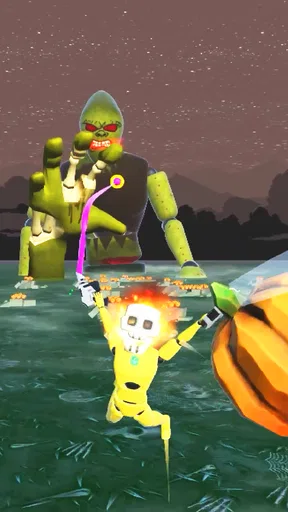
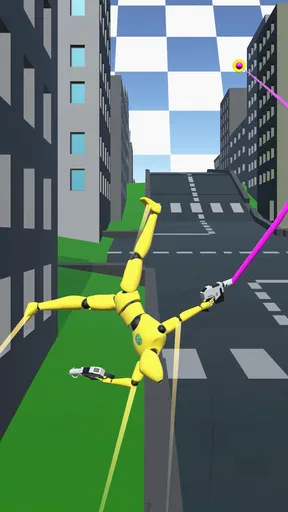
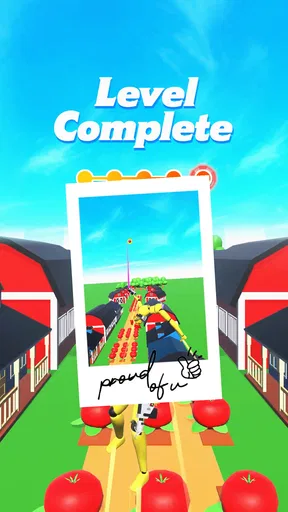
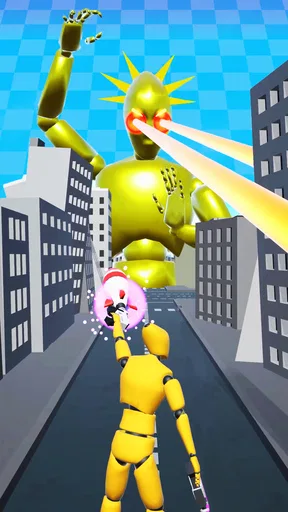
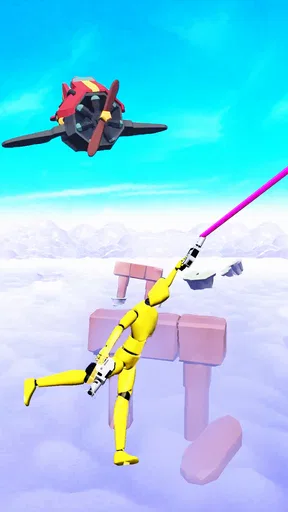
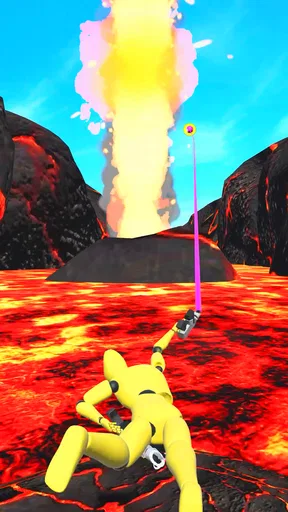
Our Review of Grapple Hook Hero : Zip Action
 Analysis by Appyee
I approached Grapple Hook Hero: Zip Action expecting a quick action game built around one simple idea: move through the air with a grappling hook and keep your momentum under control. That first impression is accurate, but the appeal is less about the hook itself than about learning when to use it. The game asks for short decisions, clean timing, and a willingness to retry when a jump goes wrong.
It is a free action game from KAYAC Inc., aimed at players who enjoy compact touch-screen challenges rather than long story campaigns. The Teen content rating makes it a better fit for older children, teenagers, and adults than for very young players. It has reached more than ten million installs and holds an average rating of 4.3 from roughly 8,800 ratings, which suggests that its straightforward movement concept has found a sizable audience.
What I like most is how quickly the central interaction becomes understandable. You are not asked to study a complicated control scheme before playing. The hook, the direction of movement, and the need to react at the right moment form the heart of the experience. That makes it easy to pick up during a short break, while the timing demands give experienced players a reason to keep refining their approach.
What the first few minutes really feel like
The store summary presents a game about hooking, speeding, jumping, swinging, and flying. In practice, I found that the important skill is not simply attaching the hook to something. The real challenge is using that attachment to shape your next movement. A hook used too early can leave you moving in an awkward direction, while a late decision may not give you enough time to recover.
That distinction matters for first-time players. At the beginning, it is tempting to treat every obstacle as a target and tap as soon as one appears. I had better results when I watched the route first and thought about where the hook would pull me rather than where it would attach. This small change makes the game feel less random and gives each attempt a clearer purpose.
The action is best understood as a sequence of short corrections. You start a movement, observe how your character travels, then decide whether the next hook should preserve that line or change it. When everything connects, the result feels smooth and satisfying. When it fails, the mistake is usually easy to identify: I acted too soon, aimed without considering the landing, or tried to save a jump that had already gone bad.
That makes the game suitable for people who like immediate feedback. It does not ask me to remember a large cast of characters or manage a broad inventory before I can enjoy it. I can focus on movement and timing from the first session. Players looking for a deep narrative, role-playing progression, or a large world to explore should set their expectations differently, because the attraction here is the action loop itself.
Why the simple idea has more depth than it first appears
The hook creates a useful tension between speed and control. Moving quickly feels exciting, but speed can also reduce the time available for the next decision. I learned to value a stable approach over a dramatic one when a landing looked uncertain. In other words, the fastest route is not always the most reliable route.
A practical technique is to divide each section into three questions: where can I attach, what direction will that create, and where will I be after the swing or pull finishes? Thinking this way prevents the common mistake of choosing a target only because it is visible. The best target is the one that leaves a workable next position.
Another useful habit is to treat failed attempts as route testing rather than wasted time. On an early run, I may discover that a particular hook point gives me a poor angle. On the next run, I can delay the action or choose a different attachment. This is especially helpful for players who normally dislike trial-and-error games, because the feedback is immediate and tied directly to the last decision.
The trade-off is that the experience can feel repetitive if you want constant mechanical change. Its core pleasure comes from improving execution, not from replacing the basic action every few minutes. I would recommend it to someone who enjoys polishing a movement pattern, but not to someone who needs frequent new systems to stay interested.
Getting started without fighting the controls
I’d use the first few attempts to get comfortable with the touch controls before worrying about speed or style. Watch how each hook changes your direction, then make your next choice with the landing in mind; that simple habit makes early progress feel much less like guesswork. Once the controls feel familiar, the next section can focus on turning those individual actions into a reliable route.
What to do immediately after installing
The current version is 7.0, and the game supports devices running Android 6.0 or later. Once it is installed, I would begin with a short session rather than trying to master everything at once. The most useful first goal is not reaching the end of a difficult sequence. It is learning how the character responds immediately after the hook connects.
Pay attention to the direction of travel and the amount of time available before the next decision. A new player can easily focus on the hook animation and miss what happens afterward. I found it more useful to watch the character’s position and prepare for the next action as soon as the current pull begins.
Because the game is free, it is easy to try without making a commitment. That also means I would approach it as a pick-up-and-play title: use it for a few minutes, stop when concentration drops, and return later. Short sessions are not a weakness here. They suit the way the game delivers feedback and make it easier to remember which timing mistake caused a failed attempt.
If you are playing on a phone with a smaller screen, keep your attention on the route rather than on decorative movement. Touch controls can feel less forgiving when a finger covers part of the action, so I prefer using deliberate taps and avoiding frantic input. The calmer approach also helps reveal whether a failure came from aiming or from choosing the wrong moment.
The first meaningful success
Your first meaningful success is not merely attaching the hook once. It is completing a short sequence while already thinking about the following move. When I reached that point, the game became much more enjoyable because each action stopped feeling like an isolated reaction and started feeling like part of a route.
To reach that stage, begin by choosing safe, obvious targets. Do not chase speed immediately. Make the first connection, observe the resulting movement, and then wait for a clear opportunity rather than forcing the next hook. Once that feels comfortable, try to reduce hesitation one decision at a time.
A helpful exercise is to repeat a section with one specific goal. On one attempt, concentrate on attaching accurately. On another, focus on keeping a useful angle after the pull. On a third, try to connect the two skills. This is more effective than simply replaying without knowing what you are trying to improve.
When a run fails near the end of a sequence, I would resist changing everything. Identify the last decision that still felt controlled. Then adjust only the next action on the following attempt. This method keeps the learning process manageable and avoids turning one mistake into a series of random inputs.
Confusion that can make the game seem harder
The most common confusion is assuming that the hook is a rescue button. It is not enough to use it whenever the character appears to be falling. The attachment changes the movement that follows, so a desperate hook may technically connect while still placing you in a poor position. I had more consistent results when I treated the hook as part of a planned route.
Another misunderstanding is equating constant movement with good movement. The game’s speed can encourage hurried decisions, but pausing mentally for a moment often produces a better result. You do not need to react to every visible possibility. You need to choose the option that gives you the clearest next step.
Players may also wonder whether they should aim for style or safety. My answer is to prioritize a clean route first. Once the timing becomes familiar, stylish movement can emerge naturally from better control. Trying to look impressive before understanding the trajectory usually creates unnecessary failures.
It is also worth recognizing the difference between a control problem and a planning problem. If the character repeatedly moves in an unexpected direction after a successful hook, review the angle and timing of the attachment before blaming the touch response. Many frustrating attempts became easier once I stopped tapping earlier and started considering where the pull would lead.
How it compares with other quick action games
Compared with endless runners, this game places more responsibility on individual movement choices. An endless runner often emphasizes lane changes, jumping, and reacting to a stream of hazards. Grapple Hook Hero: Zip Action feels more deliberate because the hook lets you influence the path through the air. That makes it a stronger choice for players who want their failures to reflect timing and route selection rather than only reflex speed.
Compared with physics-based swinging games, it is easier to understand at the start because the central action is clearly defined. The challenge comes from using that action well, not from learning a large collection of tools. The drawback is that players who enjoy experimenting with many physics interactions may find the focused design narrower.
It also differs from larger action games that build motivation around characters, equipment, missions, or extended progression. Here, the immediate movement is the reason to play. I would choose it when I have a few spare minutes and want something interactive, not when I am looking for a world that can occupy an entire evening.
That focus is a genuine strength for commuters, casual players, and anyone who likes retry-based challenges. It is less suitable for someone who wants relaxing, low-pressure play, because the satisfaction depends on paying attention and correcting mistakes. Likewise, players who prefer turn-based action or narrative exploration may find the repeated timing loop too narrow.
Where it fits into an ordinary day
Imagine having a short wait before an appointment. You can start a session, practice one movement sequence, and stop without needing to remember a complicated plot or prepare a long mission. If the first attempt goes poorly, the next attempt immediately gives you a chance to change one decision. That makes the game a practical companion for brief breaks rather than a title that demands a large block of free time.
Another useful situation is when you want a small skill-based distraction after work or school. The game gives your attention a clear target: choose the hook, control the route, and try again. I would avoid playing when I am already impatient, though. The same quick retries that feel motivating in a calm mood can feel irritating when I am not willing to learn from a missed connection.
For families, the Teen rating is an important part of the decision. I would look at the game together with a younger player rather than assuming that a simple control scheme makes it suitable for every age. Older children and teenagers who enjoy action challenges may understand the appeal quickly, while younger users may need help with the timing and with handling repeated failure.
Who should try it and who should skip it
I recommend this game to players who enjoy mastering one strong mechanic. If you like seeing a failed attempt, identifying the mistake, and immediately testing a correction, it offers a satisfying loop. It is also a good fit for people who want a free action title that can be played in short bursts without a long introduction.
I would be more cautious if you need a substantial campaign, a detailed story, or a broad collection of activities. The grappling-hook movement is the main event, so its value depends heavily on whether that interaction remains enjoyable after the novelty fades. Players who dislike repetition or who prefer automatic movement may not find enough variety here.
There is also a difference between wanting speed and wanting control. If your ideal action game is about rushing forward without stopping, this may feel more demanding than expected. The hook can create fast movement, but using it well requires attention to position and timing. I see that as the game’s identity, not a flaw, but it is worth knowing before downloading.
For a first-time user, my advice is simple: give it enough time to learn the route logic, not just the first tap. Start slowly, choose predictable targets, and use each retry to change one thing. If that process feels rewarding, the game has probably found its audience in you. If it feels like busywork after several careful attempts, a more varied action game will likely be a better choice.
My recommendation after learning the rhythm
Grapple Hook Hero: Zip Action succeeds because it turns a familiar fantasy—swinging and flying with a hook—into a compact test of timing. KAYAC Inc. keeps the idea focused, and that focus makes the first meaningful success easy to understand: you are no longer just reacting to a target; you are deliberately building a path through the air.
The game is not perfect for every player. Its concentrated design can feel limited if you expect a large progression system, and its retry-driven action may frustrate anyone looking for a calm or story-led experience. Touch precision and route planning matter more than the short store summary might suggest, so the game rewards patience rather than random speed.
Still, I think it is worth trying if you want a free action game with an immediately readable premise and room to improve through practice. The combination of quick attempts, visible mistakes, and satisfying movement gives it a clear place among mobile action titles. For me, the deciding question is whether you enjoy refining a single skill. If the answer is yes, Grapple Hook Hero: Zip Action offers a lively way to spend a short break and a surprisingly thoughtful challenge once the first hook is no longer the hard part.
Verdict
Strengths of Grapple Hook Hero : Zip Action
- Simple controls make swinging easy to learn.
- Fast-paced levels keep short play sessions engaging.
- Hook mechanics create satisfying movement and momentum.
- Bright visuals make obstacles easy to recognize.
- Playable offline, making it convenient for travel.
Limitations of Grapple Hook Hero : Zip Action
- Repetitive challenges may reduce long-term variety.
- Precision swinging can feel frustrating on smaller screens.
- Ads may interrupt the gameplay experience.
- Progression can feel limited after mastering the basics.
- Some levels rely heavily on trial and error.
Other Releases by KAYAC Inc.
View All
Ball Run 2048: merge number
Casual4.1

Number Master: Run and merge
Action4.4

Type Spin: alphabet run game
Racing4.5

Draw Action: Freestyle Fight
Action4.3
Similar Picks in This Category
View All
Temple Run 2: Endless Escape
Imangi Studios4.1

PUBG MOBILE
Level Infinite4.3

Free Fire: 9th Anniversary
GARENA INTERNATIONAL I4.4

Talking Tom: Hero Dash Run
Outfit7 Limited4.3

slither.io
Lowtech Studios3.9

Sniper 3D:Gun Shooting Games
Wildlife Studios4.6
Frequently Asked Questions
What is Grapple Hook Hero: Zip Action?
Grapple Hook Hero: Zip Action is a fast-paced action game built around swinging, zipping, and navigating through challenging environments with a grappling hook. You control a hero who must attach the hook to suitable points, gain momentum, avoid hazards, and reach the finish area. The gameplay is easy to understand, but timing and route selection become increasingly important as levels grow more complex.
How do you play Grapple Hook Hero: Zip Action?
The main objective is to use the grappling hook to move through each stage without falling into traps or colliding with obstacles. Players generally tap or interact with hook points to swing and launch the character forward, then release at the right moment to maintain momentum. Successful runs depend on observing the level layout, reacting quickly, and learning when to attach or let go.
Is Grapple Hook Hero: Zip Action suitable for beginners?
Yes, the game is designed to be accessible for casual players, with a straightforward control system that can be understood after only a few attempts. Early stages usually provide a gentle introduction to swinging and zipping mechanics. However, later levels may require more precise timing and repeated attempts, so younger players or anyone unfamiliar with physics-based action games may need some practice.
Does Grapple Hook Hero: Zip Action require an internet connection?
The basic gameplay experience appears suited to short, self-contained sessions, so many levels may be playable without a constant internet connection. Nevertheless, connection requirements can vary depending on the version, advertisements, updates, rewards, or other online features. It is best to check the current store listing and test the game offline before relying on it during travel or in areas with limited connectivity.
Are there advertisements or in-app purchases in Grapple Hook Hero: Zip Action?
As with many free-to-download mobile action games, Grapple Hook Hero: Zip Action may include advertising, such as promotional videos or banners between attempts and levels. The availability of optional purchases can also depend on the platform and current release. Before downloading, review the Google Play or App Store listing for the latest details about ads, paid items, privacy practices, and any age-related restrictions.
Play our best games!


